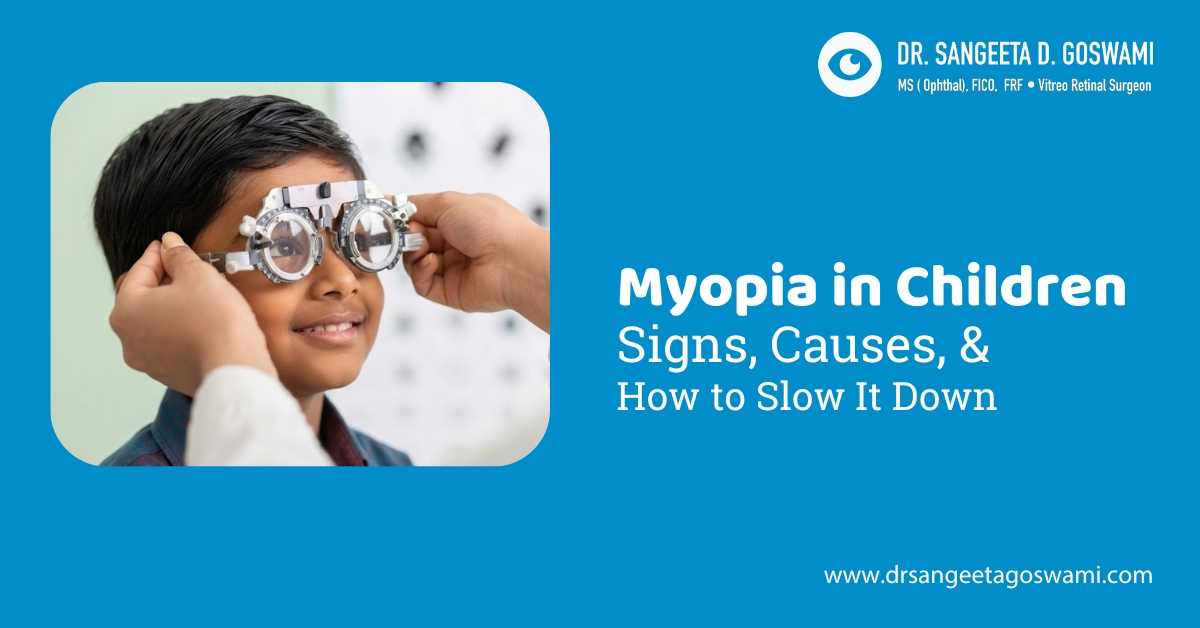


Myopia in children makes faraway things look blurry, while nearby objects are usually easier to see. It often starts during the school years and may become stronger as a child grows. It becomes imperative in such a case to consult an eye doctor in Siliguri or anywhere else.
Children may not notice that their eyesight has changed. You may see them squinting, sitting close to the TV, or bringing books closer to their face. An eye check can find out if they have myopia and whether their prescription has changed.
Clear vision is one part of care. If myopia is getting stronger, the doctor may also suggest ways to slow it down.
What Is Myopia in Children and Its Main Type?
Myopia means a child can see nearby objects clearly but has trouble seeing things in the distance. It can happen when the eye grows too long, causing light to focus in front of the retina.
- Nearby objects look clear
- Distant objects look blurry
- Glasses or contact lenses can improve vision
- Some treatments may help slow myopia progression
Types of Myopia
Myopia can vary from mild to severe and may affect the eye in different ways.
Simple Myopia:
The common type that often starts during childhood or the teenage years.
High Myopia:
A stronger form of myopia that can raise the risk of certain eye problems.
Pathological Myopia:
Severe myopia that is linked to changes in the structure of the eye.
What Are the Signs of Myopia in Children?
A child may not realise that things in the distance look blurry. Parents may notice small changes in how the child reads, watches TV, or takes part in everyday activities.
Common Signs Parents May Notice
- Squinting to see things far away
- Sitting very close to the TV
- Holding books or screens close to the face
- Moving closer to see something
- Saying that things in the distance look blurry
- Complaining of headaches or tired eyes
- Not recognising people from far away
- Avoiding activities that need clear distance vision
School-Related Signs
- Having trouble seeing the board
- Asking to sit near the front
- Making mistakes while copying from the board
- Finding some sports or outdoor games harder
- A teacher noticing that the child has trouble seeing from a distance
What Causes Myopia in Children?
Myopia can develop for several reasons. Family history, the way the eyes grow, and some daily habits may all be involved.
Genetics and Family History
A child may have a higher chance of developing myopia if:
- One or both parents have myopia
- Other family members have myopia
- Myopia starts at a young age
Eye Growth
As the eye grows longer from front to back, light may focus in front of the retina instead of on it. This makes distant objects look blurry.
Environmental and Lifestyle Factors
Daily habits may also affect the chances of developing myopia. Less outdoor time and long periods of close-up work have been linked with myopia.
- Spending time outdoors
- Reading or studying for long periods
- Doing close-up work without breaks
- Spending most of the day indoors
- Holding books or screens very close
Screen use alone does not cause every case of myopia. Time spent outdoors and the amount of close-up work also matter.
What Can Increase the Risk of Myopia in Children?
Some children have a higher chance of developing myopia. Family history, age, and daily habits can all play a role.
A child may be more likely to develop myopia if they:
- Have a parent with myopia
- Spend time outdoors
- Do close-up work for many hours
- Develop myopia at a young age
- Have a prescription that changes often
- Have certain genetic or demographic risk factors
When Does Myopia Start and How Long Can It Progress?
Myopia often starts in childhood and may continue to change through the school years and teenage years. When it begins early, there is more time for the prescription to increase.
The pattern is different for every child. Some have small changes, while others may need their prescription checked often.
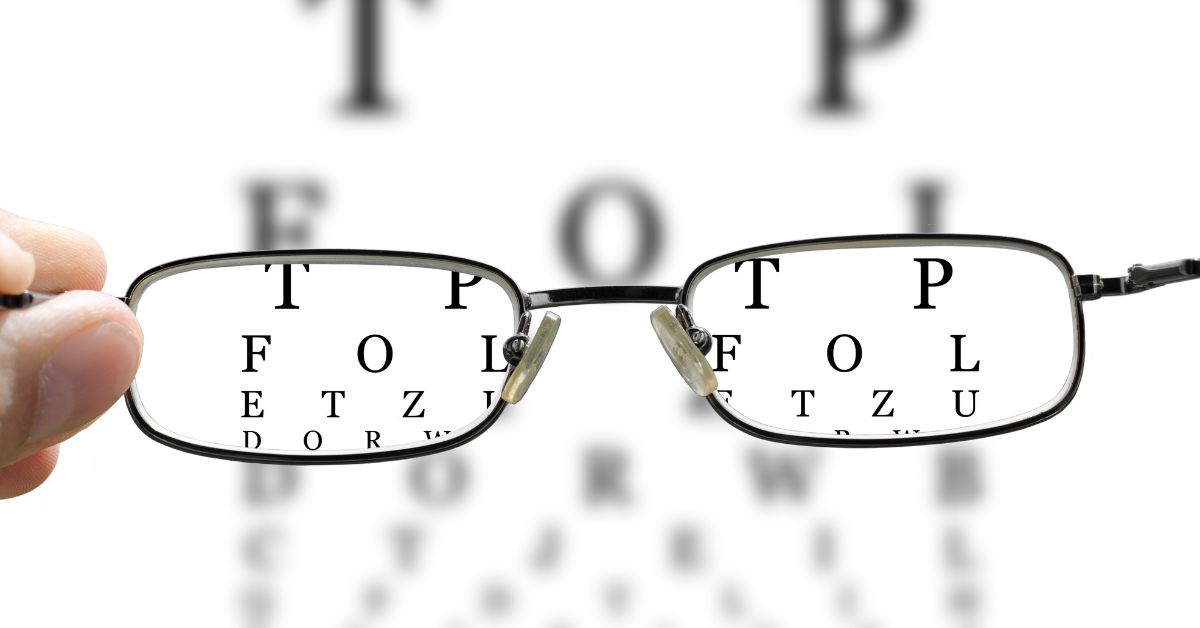
How Is Myopia Diagnosed in Children?
A complete eye examination can confirm myopia and measure the child's prescription. The doctor will also make sure the eyes are healthy.
The examination may include:
- Visual acuity test: Checks how clearly the child can see.
- Refraction test: Measures the prescription needed for clear vision.
- Eye health examination: Checks whether the eyes are healthy.
- Focusing and eye movement checks: Done when needed.
A school vision screening can spot a possible problem, but it does not replace a full eye examination.
How Is Myopia Treated in Children?
Glasses or contact lenses can help a child see distant objects clearly. If the prescription keeps increasing, the doctor may also discuss treatment that can help slow myopia.
The choice depends on the child's age, prescription, how quickly it is changing, and overall eye health.
Specially designed myopia-control glasses:
These are made differently from regular glasses and may help slow the increase in myopia.
Multifocal or specially designed contact lenses:
Certain lens designs can correct blurry vision and may also help slow myopia.
Orthokeratology (Ortho-K):
These rigid lenses are worn overnight to temporarily reshape the cornea. They may help slow myopia in some children.
Low-dose atropine eye drops:
These may be used to slow myopia in some children. The doctor decides the strength and how long the drops should be used.
Lifestyle measures:
Spending more time outdoors and taking breaks may help manage myopia.
Combination treatment:
In some cases, the doctor may recommend more than one treatment.
How Can Parents Help Manage Myopia in Children?
Parents can make a difference by noticing changes in their child's eyesight and following the treatment plan given by the eye-care professional.
- Make sure the child wears their prescribed glasses or contact lenses as advised.
- Encourage some outdoor time every day.
- Give the child regular breaks while reading, studying, or using screens.
- Keep books and screens at a comfortable distance from the face.
- Notice signs such as frequent squinting or sitting very close to the TV.
- Take the child for follow-up visits as advised.
- If the child wears contact lenses, teach them how to clean and handle them safely.
Can Myopia in Children Be Prevented?
Myopia cannot always be prevented, especially when it runs in the family. Still, some everyday habits may help reduce the risk.
- Encourage children to spend time outdoors.
- Take breaks from reading or screen use.
- Keep books and screens at a safe distance.
- Include outdoor activities in their daily routine.
- Get an eye checkup if you notice that their vision has changed.
What Are the Possible Complications of High Myopia?
Most children with myopia can see clearly when they wear the right glasses or contact lenses. High myopia can raise the risk of some eye problems, particularly as the person gets older.
These can include:
- Retinal detachment
- Glaucoma
- Cataracts
- Changes to the retina
- Abnormal blood vessel growth
High myopia does not mean that a child will definitely develop these problems. Regular eye examinations can help monitor their eye health.
FAQs
Does screen time cause myopia in children?
Myopia in children is not caused by screen time alone. Spending a lot of time on close-up activities and not getting enough outdoor time may also play a part.
Why is myopia becoming more common in children?
Children are developing myopia, and both family history and lifestyle may be involved. Less time outdoors and more time spent on close-up activities may contribute to the increase.
Is myopia inherited from parents?
Yes, having one or both parents with myopia increases a child's chances of developing it. Family history matters, but it is not the only reason a child may become myopic.
Can a 4-year-old child have myopia?
Yes. Young children can have myopia. If a 4-year-old has trouble seeing things in the distance, an eye examination can help find the reason.
Can children with myopia live a normal life?
Yes. With proper vision correction and regular eye care, children with myopia can study, play sports, read, and take part in their usual activities.
Can myopia get worse even when a child wears glasses?
Yes. Glasses help the child see clearly, but they do not always stop myopia from getting worse. If the prescription keeps increasing, the doctor may suggest ways to slow its progression.
Can myopia come back after treatment?
Myopia does not usually disappear permanently with treatment. A child’s prescription can still change as they grow, so regular eye checkups are helpful.
When Should a Child With Myopia Have an Eye Check?
The right treatment depends on the child’s age, prescription, and how quickly the myopia is getting stronger. The eye-care professional can advise when the next check is needed.
Conclusion
A child with myopia may find it difficult to see distant objects clearly. It may also become stronger as the child grows, so vision changes should not be ignored.
Parents can look out for signs such as squinting, sitting close to the TV, or trouble seeing the classroom board. Regular eye examinations can help keep track of the child’s vision.
Spending time outdoors, taking breaks while reading or using screens, and following the right treatment can help manage myopia. If the prescription is changing, the doctor can discuss suitable options for slowing its progression.
If you are concerned about your child’s eyesight, Dr. Sangeeta Goswami can examine your child’s eyes and help you understand the right care for myopia.