
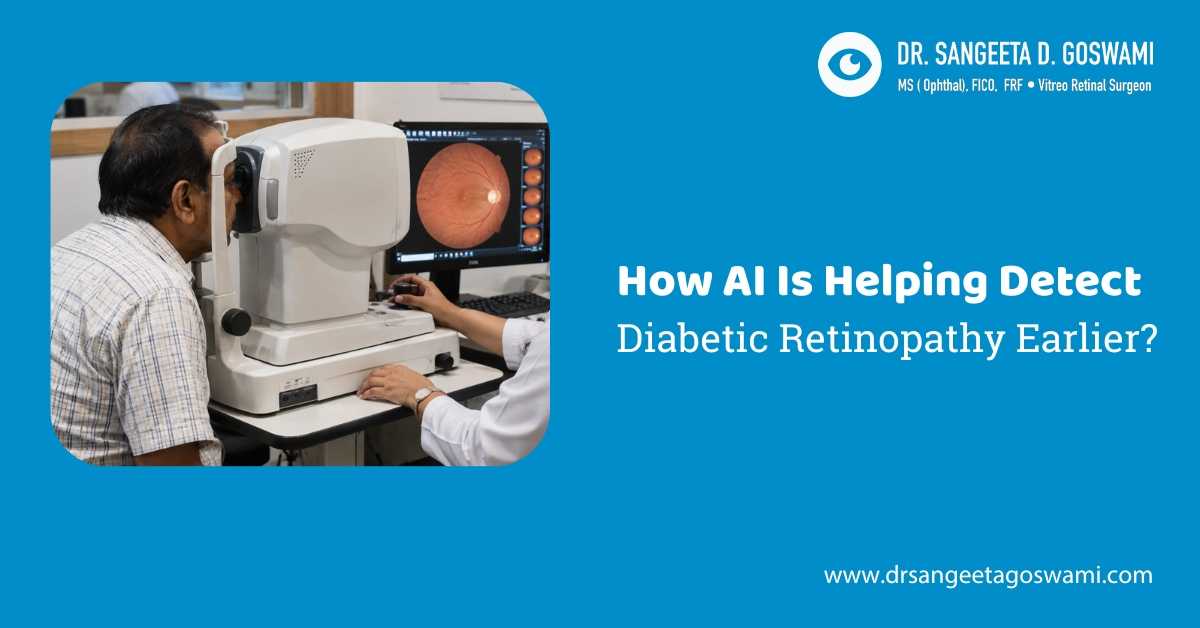


Your next eye exam may involve more than checking how clearly you can see. AI helping in eye exams is changing how retinal images, scans, and other test results are analysed, helping doctors notice certain changes that may need closer attention.
AI can help doctors identify the signs of diabetic retinopathy, glaucoma, and other retinal problems. It can also compare your eye scans from different visits, making changes easier to notice over time.
AI can make eye examinations more detailed by helping doctors review images and test results. It can also support earlier detection and easier monitoring of certain eye conditions.
How AI Is Changing the Way Eye Exams Work
Check Retinal Images
AI evaluates your retinal images and identifies abnormal patterns associated with other eye diseases. This assists your physician in identifying areas that require further examination.
Recognising Eye Issues Early
Many eye problems develop without giving any signs or symptoms. AI-based screening can identify early changes in diabetic retinopathy, glaucoma, and other retinal diseases before any changes in vision are apparent.
Checking OCT Scans Carefully
These scans give a detailed picture of the retina, while AI can also detect very small changes in retinal thickness, fluid buildup, and other unusual signs.
Comparing Past and Current Results
Your eye health can change slowly, and AI can compare scans from the past and present to find subtle changes that might be hard to otherwise track.
Helping Doctors Review Test Results
An eye examination can produce a lot of information. AI can help organise and analyse some of these results, while the doctor considers them alongside your symptoms, medical history, and other examination findings.
Difference Between AI-Assisted and Traditional Eye Checkups
|
AI-Assisted Eye Checkup |
Traditional Eye Checkup |
|
AI can analyse retinal photographs and eye scans for specific patterns. |
The eye doctor examines the images and test results based on clinical experience. |
|
It helps identify subtle changes that may need a closer look. |
Detection depends largely on the doctor's examination and interpretation. |
|
The process involves a large number of images in a short time. |
Reviewing images and reports manually can take more time. |
|
It can compare current scans with previous scans to highlight changes. |
The doctor compares previous and current results during follow-up visits. |
|
This supports screening for certain eye conditions. |
The doctor decides which tests are needed based on the patient's condition. |
|
It can help identify patients who may need further examination. |
The doctor evaluates whether further testing or treatment is required. |
|
This provides measurements of certain features seen in eye scans. |
Measurements are taken and interpreted using available examination methods. |
|
It helps organise large amounts of eye-test information. |
Information is reviewed and interpreted manually by the eye-care professional. |
|
May help extend screening to areas with limited access to specialists. |
Access to screening may depend on the availability of trained eye-care professionals. |
|
This provides consistent analysis for the specific task it was designed and tested for. |
Assessment can vary depending on the examination, findings, and clinical judgement. |
|
Useful for monitoring certain changes across multiple appointments. |
Monitoring is handled through regular examinations and comparison of previous records. |
|
It can reduce some of the time spent on image-based analysis. |
More of the image-review process is handled directly by the doctor. |
|
Works as an additional tool during selected parts of an eye examination. |
The doctor remains at the centre of the examination and decision-making process. |
|
Cannot understand the complete patient situation on its own. |
The doctor can consider symptoms, medical history, lifestyle, medications, and test results together. |
|
Requires appropriate training, testing, and validation for its intended use. |
Relies on the training, experience, and clinical judgement of the eye-care professional. |
Can AI Detect Eye Diseases?
Yes, AI can help to detect different types of eye conditions by analyzing retinal images, OCT scans, and other test results.
- Diabetic retinopathy
- Age-related macular degeneration
- Glaucoma
- Diabetic macular edema
- Retinal vascular diseases
- Retinopathy of prematurity
- Other retinal disorders
AI can help with identification, but make sure that the final checkup is done by your ophthalmologist.
What Are the Benefits of AI-Powered Eye Exams?
AI can make certain parts of an eye examination easier to analyse and may help doctors identify changes that need attention. Some of the main benefits include:
Earlier detection
AI can help spot subtle signs of certain eye conditions before noticeable vision changes occur.
Quick image analysis
It can review retinal photographs and scans in a short time, which may help speed up parts of the examination.
Better monitoring
AI can compare images and measurements from different visits, making gradual changes easier to track.
Support for doctors
It gives eye-care professionals additional information when assessing a patient's eye health.
More consistent analysis
For specific tasks, AI can assess images using the same criteria each time.
Improved screening
AI-assisted screening can help identify people who may need a further eye examination, particularly when specialist access is limited.
Handling large amounts of data
AI can process large numbers of images and test results, which can be useful in busy eye-care settings.
Personalised follow-up
By tracking changes in eye images and measurements, AI may help doctors decide which patients need closer monitoring.
Greater access to eye screening
AI-based tools may support screening in areas where there are fewer eye-care professionals.
Saves time on repetitive tasks
AI can assist with some image-based analysis, allowing eye-care professionals to spend more time discussing findings and patient care.
What Is the Future of AI-Powered Eye Care?
AI is expected to become more involved in eye care as the technology improves. Instead of replacing eye doctors, it can help them analyse more information and keep a closer watch on changes in eye health.
Earlier Detection:
AI may help identify small changes in retinal images before a person notices vision problems, allowing doctors to investigate possible conditions sooner.
Remote Eye Screening:
AI-assisted screening could make basic eye checks easier to access in areas where specialist eye-care services are limited.
Better Disease Monitoring:
AI may compare eye scans and test results from different appointments, helping doctors notice whether a condition is stable or changing.
Quicker Image Analysis:
As eye examinations produce more detailed images, AI can help review large amounts of visual information without requiring every image to be assessed manually from the beginning.
Personalised Eye Care:
Future systems may combine eye images, test results, and relevant patient information to help doctors understand individual risks and plan appropriate follow-up.
Improved Access to Care:
AI could support screening programmes in schools, community health centres, and remote areas where regular access to eye specialists may be difficult.
Support for Eye Doctors:
AI can take care of certain image-analysis tasks while doctors focus on examining patients, discussing concerns, and deciding on diagnosis or treatment.
More Detailed Eye Exams:
As AI becomes better at working with different types of eye-test information, it may help doctors build a clearer picture of how a patient's eye health is changing over time.
Frequently Asked Questions
1. Can AI detect eye diseases?
Yes. AI can analyse retinal photographs, OCT scans, and other eye-test data to identify signs linked to conditions such as diabetic retinopathy, glaucoma, and age-related macular degeneration. The findings still need professional review.
2. Can AI replace an eye doctor?
No. AI can help analyse specific tests, but it cannot replace the complete assessment of an eye-care professional. Doctors consider symptoms, medical history, examination findings, and test results before making decisions.
3. Is an AI-powered eye exam safe?
AI-assisted eye exams can be safe when the system has been properly tested and is used for its intended purpose. A qualified professional should review the findings and decide whether further examination is needed.
4. How does AI help during an eye exam?
AI can analyse retinal images and scans, look for specific changes, compare results, and highlight findings that may need closer attention. This gives the eye-care professional additional information during the examination.
5. Can AI detect eye problems before symptoms appear?
AI may help identify early changes that aren't yet causing noticeable vision problems. This is particularly useful for conditions where early detection can help with timely monitoring and treatment.
6. Is an AI eye exam better than a traditional eye exam?
Not necessarily. AI can make certain image-based tasks quicker and more consistent, while a traditional examination allows the doctor to assess the patient's overall eye health. Combining both can provide more useful information.
Conclusion
AI is changing eye exams by helping doctors analyse retinal images, identify possible eye conditions, and track changes over time. AI helping in eye exams can make certain parts of screening and monitoring more efficient while giving doctors additional information to consider.
However, AI is a supporting tool, not a replacement for an eye-care professional. Regular eye checkups are still important for finding and managing eye problems, even when you don't notice any changes in your vision.
If you have any concerns about your vision, consider consulting Dr. Sangeeta Goswami. A proper eye checkup can help identify problems early and guide you towards the right care.