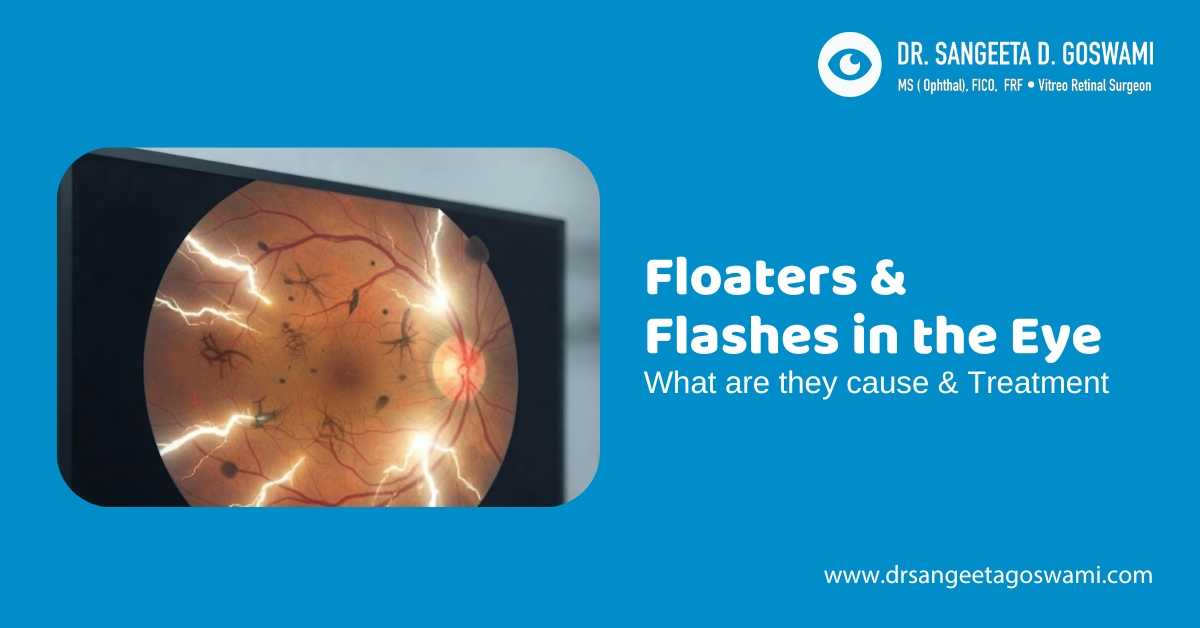



Have you ever noticed small spots or cobweb-like shapes drifting across your vision? Or seen a sudden flash of light when nothing around you is flashing? These are common signs of floaters and flashes in the eye.
They often develop as the eye changes with age. Sometimes, these symptoms may signal a retinal tear or detachment that could threaten your vision.
Knowing what causes these symptoms and when to get your eyes checked can help you respond at the right time.
If you suddenly notice new floaters or flashes, see many more than usual, or notice a dark shadow across your vision, seek urgent eye care. Sudden vision loss also needs immediate medical attention. Do not wait for these symptoms to go away on their own.
What Is the Difference Between Eye Floaters and Flashes?
|
Eye Floaters |
Flashes of Light |
|
Look like tiny dots, dark spots, threads, or cobwebs. |
Look like sparks, streaks, or flickers of light. |
|
Move as you move your eyes. |
Often appear briefly near the edges of your vision. |
|
Usually occur when small clumps in the eye's gel cast shadows on the retina. |
May occur when the gel pulls on the retina. |
|
It may be easier to notice against a bright sky or a white wall. |
May be more noticeable in dim surroundings. |
Why do Eye Floaters and Flashes Occur?
Floaters and flashes can result from age-related changes or eye conditions that need treatment.
Age-Related Changes in the Vitreous
As you age, the vitreous becomes more liquid, and tiny fibers may clump together, creating floaters.
- Floaters may look like dots, threads, or cobwebs.
- Older floaters may become less noticeable.
- New symptoms need medical attention.
Posterior Vitreous Detachment (PVD)
PVD happens when the gel-like substance inside the eye pulls away from the retina.
- You may see floaters or flashes of light.
- This pulling may sometimes lead to a retinal tear.
- A dilated eye examination is needed to check the retina, and follow-up visits may be necessary.
Retinal Tear or Retinal Detachment
Pulling on the retina can cause a tear, allowing fluid to collect underneath and lead to retinal detachment.
Warning signs:
- Sudden increase in floaters
- New flashes of light
- A dark shadow across your vision
- Sudden vision loss
Retinal detachment needs immediate treatment, as waiting too long can cause permanent damage to your vision.
Eye Injury or Previous Eye Surgery
Eye injuries and some surgeries may damage the retina or vitreous.
- Watch for new floaters or flashes.
- Get urgent eye care if your sight worsens after surgery or an injury.
Inflammation or Bleeding Inside the Eye
Inflammation or bleeding inside the eye, sometimes linked to diabetes-related retinal problems, can cause floaters or changes in vision.
- You may notice dark spots, cloudy vision, or redness.
- An eye specialist can examine your eyes to find out what is causing these symptoms.
Migraine-Related Visual Symptoms
Migraines can cause visual changes, sometimes without a headache.
- Flashing lights or shimmering patterns
- Zigzag lines across your vision
- Visual disturbances that gradually spread
Do not assume that new flashes or symptoms in one eye are just a migraine. Get your eyes checked urgently to make sure there is no problem with the retina.
What Increases the Risk of Eye Floaters and Flashes?
Some people are more likely to develop floaters, flashes, or retinal problems because of their age, eye health, or medical history.
Age-Related Eye Changes
With age, the vitreous may shrink and separate from the retina. This change is more common in older adults.
Severe Nearsightedness (Myopia)
People with high myopia have a greater risk of retinal tears and detachment because their retinas may be more vulnerable to these problems.
Previous Eye Surgery or Injury
Cataract surgery or serious eye injuries may increase the risk of retinal or vitreous damage.
Diabetes and Existing Retinal Conditions
Diabetes may harm the tiny blood vessels at the back of the eye. In some cases, this leads to bleeding or tissue that pulls on the retina.
Personal or Family History of Retinal Detachment
Your risk may be higher if you or a close family member has had retinal detachment.
Having these risk factors does not mean you will develop a retinal problem. Sudden floaters, flashes, or vision changes require urgent eye care.
What Are the Warning Signs of a Serious Eye Problem?
Sudden vision changes may signal a retinal tear or detachment. Watch for these warning signs:
- Sudden increase in floaters: Many new spots or cobweb-like shapes.
- New flashes of light: Sudden flashes, especially in your side vision.
- Dark shadow or curtain: A shadow blocking part of your vision.
- Sudden blurred vision: Unexpected difficulty seeing clearly.
- Loss of side vision: Reduced vision around the edges.

How Are Eye Floaters and Flashes Diagnosed?
An eye specialist checks whether floaters and flashes are harmless or caused by retinal issues.
Medical History and Symptom Assessment
The specialist may ask about:
- When the symptoms began and how they have changed.
- Whether one or both eyes are affected.
- Any blurred vision, injury, or recent eye surgery.
- Diabetes or a history of retinal problems.
Dilated Eye Examination
Eye drops widen your pupils so the specialist can check the retina for tears, detachment, or other abnormalities. Your vision may remain blurry, and your eyes may be sensitive to light for a few hours.
Additional Eye Tests
Depending on the findings, the specialist may recommend:
- Ocular ultrasound: Checks inside the eye when the retina is difficult to see.
- OCT scan: Provides detailed images of the retina.
- Follow-up examinations: Monitor the retina if further checks are needed.
A retinal examination is important because symptoms alone cannot confirm the cause.
How Are Eye Floaters and Flashes Treated?
Treatment varies based on the cause. Most floaters need no treatment, but retinal tears or detachment require urgent care.
Monitoring Harmless Floaters
- Old floaters may not need treatment if the retina is healthy.
- They may become less noticeable over time.
- Your eye specialist may suggest follow-up visits.
- New floaters or flashes should be checked promptly.
Treatment for Posterior Vitreous Detachment
Posterior vitreous detachment (PVD) usually does not need surgery. Your eye specialist may arrange follow-up visits to check for retinal problems. A sudden increase in floaters or new flashes needs urgent assessment.
Laser Treatment for a Retinal Tear
Laser treatment seals the area around a retinal tear to help prevent retinal detachment. In some cases, the doctor may use cryotherapy, which treats the area with freezing.
Surgery for Retinal Detachment
Retinal detachment needs urgent treatment to protect your sight. Depending on the condition, the surgeon may recommend:
- Pneumatic retinopexy: A gas bubble helps move the retina back into place.
- Scleral buckle: A small support is placed around the eye to help the retina stay in position.
- Vitrectomy: The surgeon removes the vitreous and repairs the retina.
The right procedure depends on the location and severity of the detachment.
Is Surgery Needed to Remove Eye Floaters?
Most people with floaters do not need surgery. If floaters seriously affect reading, driving, or other daily activities, an ophthalmologistmay consider vitrectomy. The procedure has risks, so surgery is usually reserved for severe cases after discussing other options.
Can Eye Floaters and Flashes Be Prevented?
Age-related changes can cause floaters and flashes, so they cannot always be avoided. To care for your eyes, you can:
- Get regular eye check-ups.
- Wear protective eyewear to prevent injuries.
- Manage conditions such as diabetes.
- Seek urgent care for sudden floaters, flashes, or vision changes.
When Should You See an Eye Specialist for Floaters and Flashes?
Get your eyes checked urgently if you notice:
- Sudden or new floaters or flashes.
- A sudden increase in floaters.
- A dark shadow or curtain across your vision.
- Sudden blurred vision or vision loss.
- New symptoms after an eye injury or surgery.
Do not wait for these symptoms to settle. If an eye specialistis not available promptly, go to an emergency department.
Conclusion
Floaters and flashes in the eye are often linked to age-related changes, but sometimes they indicate a retinal problem.
Sudden floaters, flashes, or a dark shadow across your vision need urgent medical attention. Early treatment can help protect your eyesight.
Do not ignore changes in your vision, even if there is no pain. An eye check can help determine what is causing the problem.
Frequently Asked Questions
Can Natural Methods Help Manage Eye Floaters and Flashes?
You cannot get rid of floaters or stop flashes with natural remedies. If you notice new floaters or flashes, or they start getting worse, have your eyes checked by a specialist.
What Vitamin Stops Eye Floaters?
No vitamin has been shown to get rid of eye floaters. Eating a balanced diet can support your eye health, but supplements won't remove floaters.
What Is the New Treatment for Eye Floaters in 2026?
Laser vitreolysis can break up some floaters, while vitrectomy removes the vitreous gel. Both have risks, so an ophthalmologist should assess whether either treatment is suitable.
Can Eye Floaters Go Away Naturally?
Floaters may become less noticeable over time, but they do not always disappear completely.
Can Eye Exercises Reduce Floaters?
No, eye exercises cannot remove floaters or repair retinal damage. New floaters should be checked by an eye specialist.
At What Age Is It Normal to Start Getting Eye Floaters?
Floaters become more common after age 50 due to changes inside the eye. They can appear earlier, especially in people with high myopia. Sudden floaters need prompt medical attention at any age.