



Before scheduling LASIK surgery, you must evaluate the essential pros, cons, and health requirements.
LASIK is a quick, outpatient laser procedure that permanently reshapes the cornea to correct nearsightedness and astigmatism.
This surgery takes about 15–20 minutes and is mostly painless, allowing most patients to resume normal activities within 24 to 48 hours.
To ensure safety, consult a qualified eye doctor Siliguri at a premier facility to accurately evaluate your corneal thickness before booking your procedure.
While it remains an elective surgery with strict structural requirements and minor temporary side effects, meaning it is not ideal for everyone, the procedure boasts a 96% global patient satisfaction rate.
However, it may not be suitable for those with thin corneas, unstable prescriptions, severe dry eyes, or presbyopia.
This complete guide breaks down laser eye costs, success rates, and recovery timelines.
What is LASIK Eye Surgery?
A popular, fast laser eye surgery that reshapes your cornea to correct the common refractive errors is called Laser-Assisted in Situ Keratomileusis, or LASIK.
These errors are as follows.
- Nearsightedness
- Farsightedness
- Astigmatism.
The goal of this laser procedure is to reduce or eliminate your dependence on prescription glasses or contact lenses.
It does that by altering the curve of the clear front surface of the eye and changing how light enters, allowing it to focus precisely onto the retina for clearer vision.
What are the Steps to this Procedure?
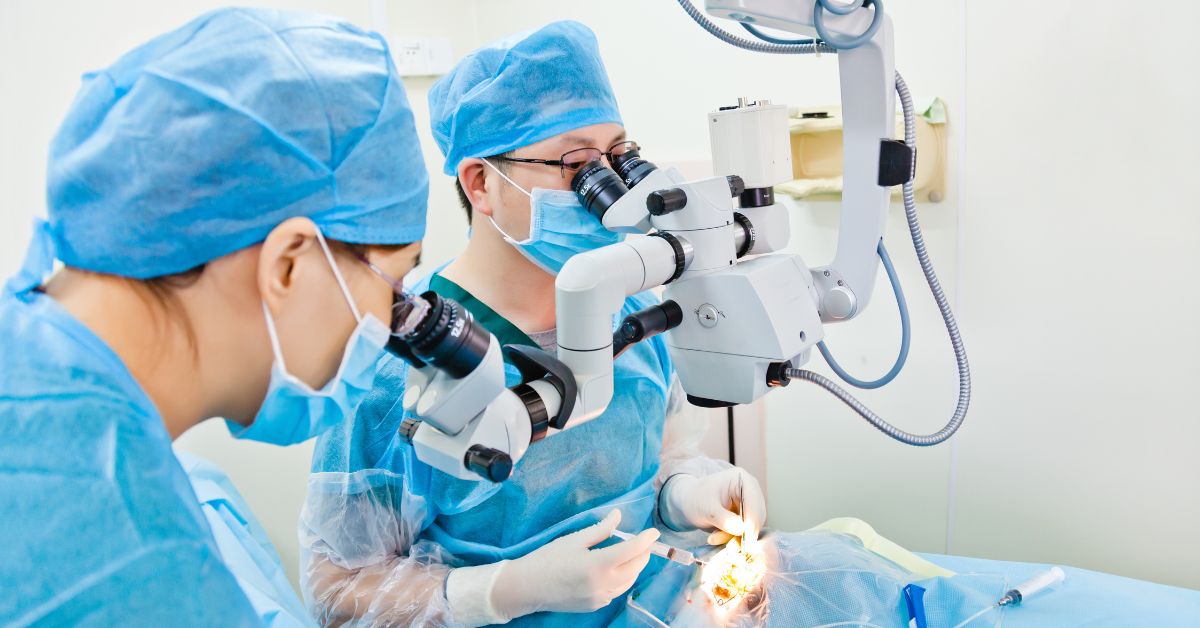
LASIK or Laser-Assisted In Situ Keratomileusis eye surgery takes only about 5 to 15 minutes per eye.
The procedure is performed like this.
- The surgeon first numbs the eye, using a laser to create and lift a thin corneal flap,
- They then reshape the underlying tissues using an excimer laser to correct vision, and
- Then they smooth the flap back into place.
Here is the step-by-step breakdown of the steps of this procedure:
1. Step 1: Pre-Surgery Preparation
The first step towards LASIK surgery starts with pre-surgery preparation. Here, your ophthalmologist will conduct a comprehensive eye examination to measure the following.
- Corneal thickness,
- Pupil size, and
- The exact prescription
And, if you wear contact lenses, you will need to stop wearing them for several weeks before the baseline evaluation.
Also, you should avoid wearing makeup, lotions, or perfumes on the day of surgery.
2. Step 2: Numbing and Securing of the Eye
The second step is numbing and securing the eye, done on the day of the surgery. This is a vital step for the following reasons.
- Avoid pain,
- Suppress the blink reflex, and
- Stabilize the eye.
The surgeon delivers numbing eye drops so you will not feel pain before the procedure begins.
For this, you will have to lie on a reclining chair under the laser equipment, and a small instrument called an eyelid speculum will be used to hold your eyelids open and prevent blinking.
3. Step 3: Creating the Corneal Flap
The third step of this surgery is to create the corneal flap, because it provides the surgeon direct access to the deeper corneal tissue, and so is a crucial step.
In this step, the surgeon creates a thin, hinged flap, which can be done using either an ultra-precise femtosecond laser or a specialized oscillating blade, called a microkeratome.
During this step, a suction ring is applied to the eye, which may cause a feeling of momentary pressure and temporary dimming of vision.
4. Step 4: Laser Reshaping of The Stroma
The next step of this procedure is to laser-reshape the stroma. Now, the surgeon carefully folds the corneal flap back to expose the underlying tissue, the stroma.
You will be instructed to stare at a specific target light to keep your eye fixed in place.
After this, an excimer laser, guided by highly accurate computerized mappings, emits cool ultraviolet light pulses to vaporize microscopic amounts of corneal tissue.
This reshapes the cornea so that light focuses properly on the retina.
5. Step 5: Repositioning of the Flap
After laser reshaping of the stroma, the next step is to reposition the flap. Now, the surgeon lays the thin flap back into its original position.
No stitches are required, as the flap adheres naturally to the underlying tissue within minutes to hours.
6. Step 6: Immediate Recovery and Aftercare
After the procedure, your eyes will be covered with protective shields to prevent you from rubbing or bumping them while they heal.
You may experience mild tearing, irritation, or a gritty feeling for the first few hours.
The surgeon will provide you with antibiotics and lubricating eye drops to aid in the healing process. Also, most patients notice significant vision improvement within 24 hours.
What are the Conditions Treated by LASIK Surgery?
LASIK surgeons typically treat refractive errors. These are common vision problems caused by an irregularly shaped cornea or eyeball that prevent light from focusing correctly on the retina.
To reduce or eliminate the need for glasses and contact lenses, the surgeon permanently alters the eye’s focusing power by using advanced lasers to reshape the corneal tissue.
The primary conditions treated include the following.
Core Refractive Errors Treated by LASIK
1. Nearsightedness, or Myopia:
Nearsightedness, also known as myopia, is a condition where distant objects appear blurry because the eyeball is too long or the cornea curves too steeply.
To treat this, the surgeon uses a laser to flatten the cornea, allowing light to focus properly.
2. Farsightedness, or Hyperopia:
Farsightedness, also known as hyperopia, is a condition where near objects are blurry because the eyeball is too short or the cornea is too flat.
To treat this, the surgeon uses a laser to steepen the cornea to bring the focus point forward.
3. Astigmatism:
Astigmatism is an uneven or irregular curvature of the cornea that causes distorted, hazy, or blurred vision at all distances.
To treat this, the surgeon smooths out these asymmetrical irregularities into a more symmetrical shape.
Age-Related Vision Changes Treated by LASIK
1. Presbyopia, or Aging Eyes:
LASIK eye surgery is also performed to treat age-related or ageing eyes. It treats the natural, age-related loss of flexibility in the eye’s inner lens that makes it difficult to focus on close-up text or small objects.
While standard LASIK reshapes the cornea and cannot fix a stiff lens, many surgeons treat this using Monovision LASIK.
In this specialized procedure, the surgeon optimizes the dominant eye for distance vision and leaves the non-dominant eye slightly nearsighted to aid close-up reading.
What are the Pros of LASIK Surgery?
The primary advantages or pros of LASIK Surgery are as follows.
- Exceptional vision correction accuracy
- An extremely rapid recovery window
- The permanent reduction of your dependency on glasses or contacts.
Also, this procedure is quick, typically painless, and provides rapid vision recovery for most patients.
Here are some pros of getting LASIK Surgery.
1. Maximum Improvement of Vision:
The biggest pro or advantage of LASIKis that it improves your vision to the maximum. It boasts a massive success rate, with studies showing that around 96% of patients achieve 20/20 vision or better.
This effectively also treats near-sightedness, far-sightedness, and astigmatism.
2. Providing Rapid Results and Recovery:
Another pro of LASIK surgery is that it provides you with rapid results and recovery and is ideal if you have thin corneas or an active lifestyle, offering permanent vision correction.
This laser treatment typically takes only 10-15 minutes per eye and uses numbing drops so you don't feel pain.
And most patients notice clearer vision within 24 to 48 hours and can resume normal routines shortly after.
LASIK Recovery Timeline
-
Days 1–3, The Healing Phase:
Starting from days 1 to 3, you will experience 48 to 72 hours of moderate discomfort, light sensitivity, and watery eyes. You will have to wear a protective bandage contact lens while the surface cells regenerate.
- Days 4–7, The Functional Vision:
By the 4th to the 7th day, the surface layer usually heals, and your surgeon will remove the bandage contact lens. Your vision will now begin to sharpen rapidly, and you can generally return to work and light daily activities.
- Weeks 2–4, Stabilization:
Between weeks two and four, normal exercise, showering, and the use of eye makeup can usually be safely resumed.
- Months 1–6, Full Clarity:
By the 1st and the 6th months of your surgery, visual fluctuations completely subside as the eyes adjust to their final corrected state.
3. Long-Term Cost Savings:
While the upfront cost is a notable investment, LASIK eliminates the recurring expenses of the following.
- Buying new prescription glasses
- Daily contact lenses
- Cleaning solutions
All these allow for significant financial savings over time.
While the upfront procedure can range between ₹40,000 and ₹1.2 Lakh per eye in India, the procedure pays for itself over time, ultimately saving thousands of rupees over your lifetime.
4. Providing Permanent Results:
Because it permanently reshapes the cornea, and the removed tissue does not grow back, LASIK surgery provides permanent results.
Allowing most patients to eliminate their dependency on glasses or contacts, this corrects refractive errors like the following.
- Myopia
- Hyperopia
- Astigmatism
Some Permanent Advantages of LASIK
- Corneal Reshaping:
The excimer laser vaporizes and sculpts microscopic layers of the cornea, with the correction being non-reversible.
- Fast and Lasting Success:
Studies tracking patients for decades show that the corneal shape remains extremely stable, with the vast majority maintaining 20/40 vision or better.
- Reduced Infections:
By eliminating the daily insertion of foreign objects (contact lenses), you significantly reduce your risk of chronic eye infections.
- Financial and Lifestyle Value:
Over time, the one-time cost of the procedure can be more economical than continuously purchasing new frames, lenses, and contact lens solutions.
5. Ensuring Increased Lifestyle and Active Freedom:
LASIK gives you freedom by saying goodbye to foggy lenses, smashed frames, or the hassle of carrying contact lens cases on vacations.
So, you can freely engage in sports, swimming, and outdoor activities without visual restrictions.
6. Lowering the Risk of Daily Infections:
Frequently inserting contact lenses introduces a daily foreign object to your eyes, raising the risk of serious infections.
And because LASIK eliminates the need for contacts, it provides a safer, more hygienic long-term profile for your eye health. This is how LASIKlowers the risk of daily infections.
What are the Cons of LASIK Surgery?
While LASIK boasts a high success rate, it is an irreversible surgical procedure that alters the structural integrity of your cornea.
It is not suitable for everyone for the following reasons.
- It can cause permanent visual disturbances, and
- It requires careful consideration of the long-term risks before moving forward.
Some Cons of LASIK Surgery
1. Permanent Alteration of the Cornea:
The biggest disadvantage or con of LASIK is that it permanently alters the cornea because it involves cutting and lifting a delicate flap in the cornea.
This corneal tissue is permanently severed and never fully fuses back to its original strength, making the eye more susceptible to trauma.
2. Dry Eye Syndrome:
The procedure temporarily or sometimes permanently disrupts tear production because it severs corneal nerves during flap creation.
This can cause persistent eye discomfort, grittiness, and a reduced blink rate, contributing to being a disadvantage of it.
3. Disturbances in Your Night Vision:
Many patients experience lasting visual artifacts. Glare, halos, which are rings around lights, starbursts, and double vision are common and can significantly interfere with night driving.
4. Causes Permanent Vision Loss or Irreversible Damage:
In rare cases, severe complications like infections, inflammation, or device malfunctions can lead to permanent loss of visual lines that cannot be corrected with glasses or contacts.
5. Not a Cure for Presbyopia:
LASIK does reshape the natural lens inside the eye, but it only reshapes the cornea. And, as you age, you will still likely require reading glasses, called presbyopia, for close-up tasks.
6. Strict Candidacy and High Out-of-Pocket Cost:
LASIK is largely considered an elective cosmetic operation, so medical insurance rarely covers it.
Additionally, individuals with thin corneas, unstable prescriptions, or autoimmune diseases are strictly disqualified from the surgery.
Who are the candidates for LASIK Surgery?
The ideal candidates for LASIK should be and have the following.
- At least 18 years of age
- Have a stable glasses prescription for at least a year
- Possess healthy corneas.
This procedure is conducted to correct the following.
- Myopia, which is nearsightedness,
- Hyperopia, which is farsightedness, and
- Astigmatism.
People with severe dry eyes, glaucoma, or uncontrolled diabetes are generally ineligible.
To ensure you are a fit, eye care professionals check the following key factors:
- Age:
You must be at least 18 years old, though many surgeons prefer waiting until age 21 when vision has fully stabilized.
- Stable Vision:
Your prescription must not have changed by more than 0.50 diopters in the 12 months leading up to the surgery.
- Corneal Health & Thickness:
Your corneas must be sufficiently thick and free of conditions like keratoconus or scarring.
- Good General Health:
Candidates should not have autoimmune diseases, like lupus, rheumatoid arthritis, or poorly controlled diabetes, that can impair healing.
- Pregnancy and Nursing:
Hormonal changes affect vision, so women who are pregnant or breastfeeding are disqualified until their hormones stabilize.
Conclusion
LASIK is a quick, laser procedure that takes about 15 to 20 minutes, and some advantages are that it permanently reshapes the cornea to correct nearsightedness, farsightedness, and astigmatism.
Some cons of this procedure are that it causes dry-eye syndrome, permanently alters the cornea, disturbs your night vision, and sometimes causes irreversible damage.
For this, you need to be at least18 years old and have a stable glasses prescription for a year, along with healthy corneas.
An experienced eye doctor Siliguri trusts can provide the comprehensive pre-operative evaluation needed to ensure you safely meet all these physical and medical prerequisites.
Schedule an appointment with Dr. Sangeeta D. Goswami to evaluate your eligibility for LASIK today.

